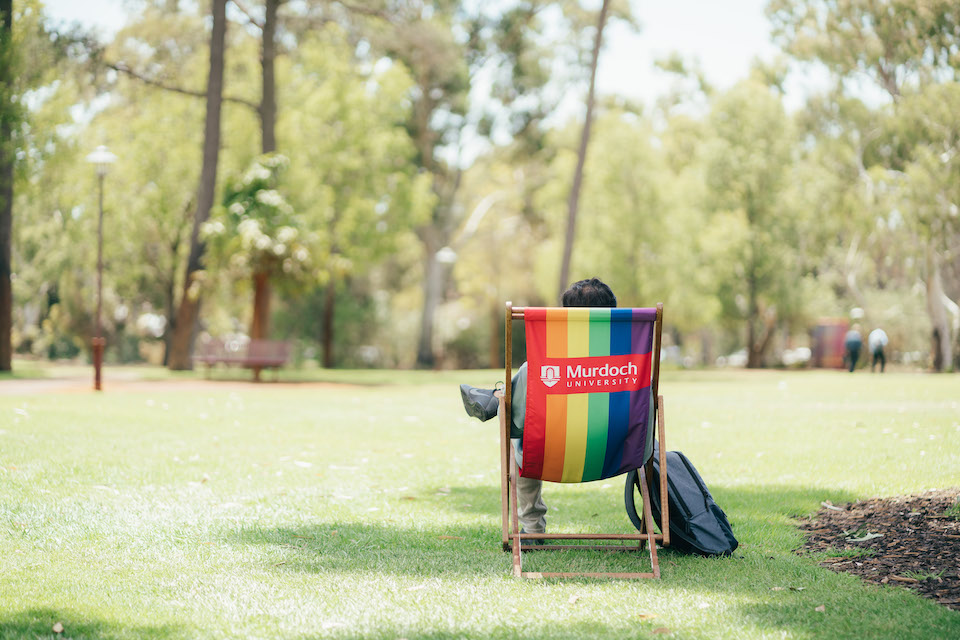
The Master of Business Administration provides a comprehensive exposure to the key analytical tools required to make sound business decisions. It can be completed in one year full-time or two years part-time using Murdoch’s trimester model.
Murdoch MBA graduates have an exceptionally high rate of employment. To be a part of this success story contact Murdoch Business School to enquire – call 1300 MURDOCH.
When
the world’s first oil crisis hit in 1973, a young Peter Newman was fulfilling
a dream of post-doctoral studies at Stanford University. Californian television
was running pictures of panic-stricken Americans stealing petrol from their
neighbours, so desperate were they to keep their cars moving. By contrast,
images beamed in from Holland showed people cycling and roller skating on
freeways and simply getting on with life.
Why the difference? Pursuit of an answer has dominated Peter Newman’s life ever since and taken him to the dizzy heights of World Bank consultancies and international lecture circuits on transport and urban development.
Today, Professor Newman is anchored as Director of Murdoch’s Institute for Sustainability and Technology Policy. He chairs the Western Australian Sustainability Roundtable, which advises the Premier on how to implement the world’s first State Sustainability Strategy, a blueprint written at Newman’s direction. As all good activists do, he made sure that the project provided others an opportunity to embrace his vision. Fifty research students from Murdoch helped draw up the 360-page manifesto for government operations.
On the strength of the strategy’s success, he was recently appointed Sustainability Commissioner for New South Wales.
Huge databases on the dynamics of world cities have been amassed with his colleague Associate Professor Jeff Kenworthy, driven by a passion for finding alternatives to cars, notably cycling, light rail and railways. It turns out that Holland is something of a leader in all three!
While a City of Fremantle councillor in the seventies Newman started Friends of the Railways, a group that argued the folly of the decision by the government of Sir Charles Court to tear up the Perth- Fremantle rail line. The campaign was credited as the pivotal cause of the government’s downfall and reinstatement of the rail service by the new State government in 1983.
Since then the momentum of rail development in Perth has never slowed, with 280 kilometres of track and 72 stations at last count. The city’s fast, electrified rail system is now a national icon, with Melbourne keeping close watch and Sydney recently committing to an $8 billion upgrade to its network, partly due to Newman’s influence as a Sustainability Commissioner in NSW. A $6 billion overhaul of Denver Colorado’s rail commuter system was also influenced by the Perth model and Murdoch’s modelling.
“We’ve looked at over 100 cities and the pattern is clear - the more railways you have, the wealthier the city.” Professor Newman’s figures show that in New York, a metropolis honeycombed with subways and also home of Wall Street, people spend just 9 per cent of their wealth on running cars. Residents of Phoenix, Arizona, with no rail whatsoever, spend 19 per cent!
In Perth it is about 13 per cent and, surprise surprise, we still have one of the world’s highest car dependencies. Until that ceases to be, you can safely bet your next bus fare that we will be hearing a lot more from Murdoch’s Institute for Sustainability and Technology Policy.